
Helmut K. from Dead But Dreaming (www.myspace.com/deadbutdreamingtheband) asks:
im really hype on promotiong...we have a cd for sale and also starting soon i wanna have promo cd samplers with 3 songs on them to give out for free at shows.
burned cds and given out at shows with the myspace and email address on them...for buzz factor.
what do you think?
Mrchgrl says:
Honestly, people never listen to cd's that are given to them for free. I'd say one out of 20 people you give them to might actually listen.
Your best bet? Do something different. Don't try and be like every other band out there, handing out samples and praying someone hears your stuff. The bands that are successful are the bands that let the fans and the success come to them, they dont need to seek it out because they are already great at what they do.
My advice is put on a wicked live show, write good songs that people will like and if you want to spend time/money/energy on giving something away, be unique.
A good option? USB Keys
have your band logo printed on the side, have your demos, publicity photos, bio, epk, award info, whatever uploaded onto them and ONLY Give them to industry people you want on your team. You can SELL them at your merch table if you have the album on them and the best part? They are reuseable!
More Info;
Giving away stuff to promote your band is a great way to gain new fans and get yourself out there! Helmut definitely has the right idea, it’s just the approach that could be different. Every band wanting a shot gives out demos, people accept them because it’s the polite thing to do, but don’t ever listen to them on most occasions.
Having free demos is a great idea, just don’t walk around giving them out. Have them available for free at your merch table and announce while you perform that you will be giving away a couple free songs to the first 20 or 50 people at the merch table. Not only will that get people over to your merch table which could equal more sales, but it also assures that only the people who WANT the demos will get them.
Other options for freebies to get peoples interest include but aren’t limited to: Lighters, Matches, Condoms, Bottled Water, Stickers, Magnets, Buttons, Pens, Lanyards, Toques and more! All of these things can be sold or given away for free because they aren’t super expensive to make.
Showing posts with label merch 101. Show all posts
Showing posts with label merch 101. Show all posts
Saturday, February 7, 2009

Friday, February 6, 2009
Excuses, Excuses!
Quite likely the most frequently used excuse I hear from bands and artists about why they aren’t getting [new] merch is that they don’t have the “funds” to get merch made. “We want to wait until we have more money until we get merch” is unfortunately one of the lamest excuses in the book. I don’t mean to be harsh about this and after all, it is my job to get you guys to understand what you don’t already, right?
Making a budget (and sticking to it) is quite likely the most important thing a band can do. It shouldn’t be difficult to raise the money necessary to get a run of merch going in more than two to four months. Every show that your band plays without merch should be considered a show that loses money. It’s a missed opportunity for your band, not just to make a bit of extra cash (which could go towards making more or better merch) but it’s a missed opportunity for advertising, for a connection with the people in your audience, and for business opportunities.
It is as easy as each band member putting $50/month into a bank account. After one month? Maybe $100, maybe $250... after two? $200 to $500... four? Potentially over a thousand bucks... that is more than enough to get a first run going. Use that first collective amount to get some GOOD t-shirts. Don’t get the cheapest tee’s you can find and don’t save money on printing, spend less, get less. Spend more, make more. Invest in quality t-shirts and quality printing.
In the meantime, while you’re building up your savings, research what kind of prints would work best for your band. Pay attention to what the kids are wearing at your shows. Utilize the things you see around you to your advantage! Be funny, be creative, ask questions and promote, promote, promote!!! Let your fans know there is new merch coming! Tell them it’s limited edition, you’re only doing 100 of these t-shirts and then NO MORE! What is going to be more enticing than a limited edition t-shirt from your favourite band? Offer to let them PRE-PAY for their t-shirts, that way you can make sure you get their sizes, and then put that money into your budget as well. Congratulations, your t-shirts aren’t even printed and you’ve already made a profit!
When your money is all saved up and your designs are ready to go, don’t start half-assing it, there! Hire a merch person to sell your merch, upsell everything and keep all of your profits! Divide all of your merch earnings, don’t pay out the band with that money, put it BACK into your piggy bank and use it to make MORE merch!
The second printing, instead of printing 100 t-shirts, do 250, or 500, or 1000 if you can afford it, it will be cheaper per unit costs because you are ordering more quantities! Do different types of merch, more items at different prices. Give your fans options but keep it consistent. Keep production going, keep selling and listen to what your fans have to say. Before you know it, you’ll be making enough money to pay for touring and take a bit home.
Congratulations, now you know how merchandising should work!
Making a budget (and sticking to it) is quite likely the most important thing a band can do. It shouldn’t be difficult to raise the money necessary to get a run of merch going in more than two to four months. Every show that your band plays without merch should be considered a show that loses money. It’s a missed opportunity for your band, not just to make a bit of extra cash (which could go towards making more or better merch) but it’s a missed opportunity for advertising, for a connection with the people in your audience, and for business opportunities.
It is as easy as each band member putting $50/month into a bank account. After one month? Maybe $100, maybe $250... after two? $200 to $500... four? Potentially over a thousand bucks... that is more than enough to get a first run going. Use that first collective amount to get some GOOD t-shirts. Don’t get the cheapest tee’s you can find and don’t save money on printing, spend less, get less. Spend more, make more. Invest in quality t-shirts and quality printing.
In the meantime, while you’re building up your savings, research what kind of prints would work best for your band. Pay attention to what the kids are wearing at your shows. Utilize the things you see around you to your advantage! Be funny, be creative, ask questions and promote, promote, promote!!! Let your fans know there is new merch coming! Tell them it’s limited edition, you’re only doing 100 of these t-shirts and then NO MORE! What is going to be more enticing than a limited edition t-shirt from your favourite band? Offer to let them PRE-PAY for their t-shirts, that way you can make sure you get their sizes, and then put that money into your budget as well. Congratulations, your t-shirts aren’t even printed and you’ve already made a profit!
When your money is all saved up and your designs are ready to go, don’t start half-assing it, there! Hire a merch person to sell your merch, upsell everything and keep all of your profits! Divide all of your merch earnings, don’t pay out the band with that money, put it BACK into your piggy bank and use it to make MORE merch!
The second printing, instead of printing 100 t-shirts, do 250, or 500, or 1000 if you can afford it, it will be cheaper per unit costs because you are ordering more quantities! Do different types of merch, more items at different prices. Give your fans options but keep it consistent. Keep production going, keep selling and listen to what your fans have to say. Before you know it, you’ll be making enough money to pay for touring and take a bit home.
Congratulations, now you know how merchandising should work!
Tuesday, January 6, 2009
What does the Recession mean for Merch?
Sadly we are at the beginning of what seems to be a downfall in the economy, the dollar is low everywhere and people are losing their jobs left and right; nobody seems to have much disposable income to throw around these days, so does that mean bands will stop touring, concerts will halt production and nobody will go see shows anymore? No. So where does that leave us in the world of merchandising?
Despite a year of record lows for the rest of the world, the concert industry seems to be doing better than ever, as indicated by this article by the associated press. I strongly believe that people use music as an escape from their everyday lives and put so much value on their favourite bands/artists/tunes that what little money they have, they'd most often rather use to go see a concert than on some other frivolous items. And what people are failing to understand is that this isn't heading into a 30's era depression with kids wearing cloth diapers and people losing the clothes off their backs. People will obviously have less money to work with and need to budget appropriately, but their wont lose all of their worldly posessions or have to give up all of their luxuries.
Our job in the industry is to fulfill the needs of our customers, in this case, the concert audience, while still giving them options for supporting acts on the road. Cheaper tickets to shows, more affordable items to buy at the merch table, dropping prices back down to reasonable rates. (You can still make a fair profit on a $15 dollar t-shirt, there is no reason for it to be $35 and chances are you'll sell a lot more!)
I think the concert and merchandising industry will manage to make it through the recession, so long as we put our money where our mouths are and drop prices to rates that are affordable. This doesn't mean losing profit, it just means we need to re-assess the way we make/sell merch.
Saturday, December 6, 2008
Merch:101 - 360 Deals vs. Merch
Lesson 7: What is a 360 deal and could it work for you?
You don't know how much it aggravates me when I meet a new independent band and the first thing out of their collective mouth is "When we get signed..." I just want to shake them and say "Get signed? Why on EARTH would you want to get signed?"
You see, what most bands don't understand is that Record Labels, like the rest of the free world at the moment, have no money. And what little money they do have, they spend on promotional fees and outdated advertising campaigns to shoot their mediocre talent to the fame equivalent of the stratosphere only to drop them on a dime when their albums don't sell. It's a broken system, and although, granted, there are some small gracious labels out there doing it right, they are few and far between and the ratio of talent to quality labels is somewhere at about 1 zillion to 1.
360 deals work for HUGE performers like Jay-Z and Madonna because they can negotiate their own terms. They (and their team of 100 lawyers) decide how much they make, how much they work and how long they are obligated to do so. The companies (i.e. Live Nation) putting out the money for these huge d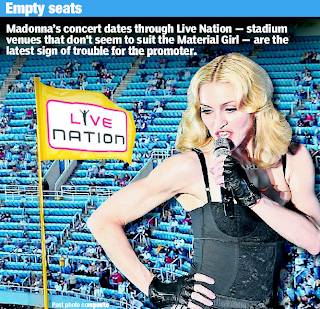 eals for these artists have complete faith that they will continue to be successful and they are willing to make sacrifices to get those names on their roster.
What is a 360 deal exactly?
360 deal is a term used to describe a contract that a company or record label offers to an artist or band. It is called a 360 deal because it covers everything that artist earns, not limited to only recordings or merchandise or appearances, but the whole she-bang. Usually the artist or band is offered a lump sum up front (varies depending on success of artist and earning potential) and a percentage of total earnings throughout the allotted time of the deal. The company would front the money for everything involved in promoting and managing the artist such as tour costs, recording costs, merchandise manufacturing costs, marketing costs, radio airplay costs and any incidentals. Whatever the artist earns from touring, album sales, digital downloads and merchandising would all go directly back to the company and the artist would earn a percentage of all of it as per the contract.
So that seems good, why wouldn't I want that for my band?
Here's the thing. When you don't own any of the material you put out, you can't control the material you put out. In this day and age, 360 deals are almost a step backwards in the evolutionary process. When we have all of this amazing and often free digital media at our fingertips and are able to be more lucrative independently with a little more hard work, why would you want to surrender the majority of your potential income over to some company just because they're willing to give you a modicum of that up front?
In addition to that, factor in the fact that the majority of artists aren't hugely successful and can't negotiate a large percentage of their earnings for themselves, chances are by signing a deal like that you will be forfeiting a large amount of money that could have been yours.
Sure, by agreeing to a 360 deal you will most likely get a sum of money nobody can shake their head at, but money doesn't last forever and most artists prefer to have control over the way that they are represented in the media and in their music. 360 deals are basically the music industry equivalent of selling your soul to the devil, except the devil is a middle aged businessman who knows nothing about music.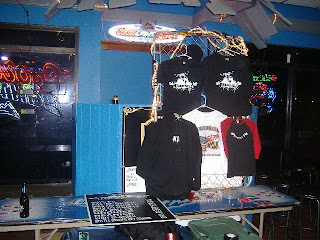
But what does this have to do with merchandising?
Good question! Pretty much everything. You see, most often when a band or artist signs to a record label, the label handles the cost of producing the album, promoting it and distributing it. This is called a P&D (production and distribution) deal. Sometimes the label will cough up tour costs. Sometimes they will offer artist development like media training and makeovers. Most often (especially now that they're all basically one album away from bankruptcy) they just offer P&D deals and expect booking agents and management teams to take care of the rest. This means that although they aren't coughing up any money for merch, they also can't collect any money made from merchandise sales, so the majority of that financial income goes directly back to the artist. This comes in handy when your publishing money has run out and you are in the middle of Saskatchewan on tour in need of a Sandwich!
Merchandise is basically the only remaining portion of income that a record label often can't touch, and not only that, but its quite easy and often cheap to build a financial income from it if you follow the right path and make the right investments. Its generally the only money you'll be taking home at the end of a tour, so you've really got to take into consideration how much of that you'd be willing to compromise for a little bit of cash up front.
There are definitely pro's and con's to both sides of the coin. I think it boils down to the type of artist you are and the control you want to have over your own brand. Seems simple enough, right?
You don't know how much it aggravates me when I meet a new independent band and the first thing out of their collective mouth is "When we get signed..." I just want to shake them and say "Get signed? Why on EARTH would you want to get signed?"
You see, what most bands don't understand is that Record Labels, like the rest of the free world at the moment, have no money. And what little money they do have, they spend on promotional fees and outdated advertising campaigns to shoot their mediocre talent to the fame equivalent of the stratosphere only to drop them on a dime when their albums don't sell. It's a broken system, and although, granted, there are some small gracious labels out there doing it right, they are few and far between and the ratio of talent to quality labels is somewhere at about 1 zillion to 1.
360 deals work for HUGE performers like Jay-Z and Madonna because they can negotiate their own terms. They (and their team of 100 lawyers) decide how much they make, how much they work and how long they are obligated to do so. The companies (i.e. Live Nation) putting out the money for these huge d
 eals for these artists have complete faith that they will continue to be successful and they are willing to make sacrifices to get those names on their roster.
What is a 360 deal exactly?
360 deal is a term used to describe a contract that a company or record label offers to an artist or band. It is called a 360 deal because it covers everything that artist earns, not limited to only recordings or merchandise or appearances, but the whole she-bang. Usually the artist or band is offered a lump sum up front (varies depending on success of artist and earning potential) and a percentage of total earnings throughout the allotted time of the deal. The company would front the money for everything involved in promoting and managing the artist such as tour costs, recording costs, merchandise manufacturing costs, marketing costs, radio airplay costs and any incidentals. Whatever the artist earns from touring, album sales, digital downloads and merchandising would all go directly back to the company and the artist would earn a percentage of all of it as per the contract.
So that seems good, why wouldn't I want that for my band?
Here's the thing. When you don't own any of the material you put out, you can't control the material you put out. In this day and age, 360 deals are almost a step backwards in the evolutionary process. When we have all of this amazing and often free digital media at our fingertips and are able to be more lucrative independently with a little more hard work, why would you want to surrender the majority of your potential income over to some company just because they're willing to give you a modicum of that up front?
In addition to that, factor in the fact that the majority of artists aren't hugely successful and can't negotiate a large percentage of their earnings for themselves, chances are by signing a deal like that you will be forfeiting a large amount of money that could have been yours.
Sure, by agreeing to a 360 deal you will most likely get a sum of money nobody can shake their head at, but money doesn't last forever and most artists prefer to have control over the way that they are represented in the media and in their music. 360 deals are basically the music industry equivalent of selling your soul to the devil, except the devil is a middle aged businessman who knows nothing about music.

But what does this have to do with merchandising?
Good question! Pretty much everything. You see, most often when a band or artist signs to a record label, the label handles the cost of producing the album, promoting it and distributing it. This is called a P&D (production and distribution) deal. Sometimes the label will cough up tour costs. Sometimes they will offer artist development like media training and makeovers. Most often (especially now that they're all basically one album away from bankruptcy) they just offer P&D deals and expect booking agents and management teams to take care of the rest. This means that although they aren't coughing up any money for merch, they also can't collect any money made from merchandise sales, so the majority of that financial income goes directly back to the artist. This comes in handy when your publishing money has run out and you are in the middle of Saskatchewan on tour in need of a Sandwich!
Merchandise is basically the only remaining portion of income that a record label often can't touch, and not only that, but its quite easy and often cheap to build a financial income from it if you follow the right path and make the right investments. Its generally the only money you'll be taking home at the end of a tour, so you've really got to take into consideration how much of that you'd be willing to compromise for a little bit of cash up front.
There are definitely pro's and con's to both sides of the coin. I think it boils down to the type of artist you are and the control you want to have over your own brand. Seems simple enough, right?
Monday, November 24, 2008
Merch 101: Moving Your Inventory
Lesson #6: OLD MERCH
A lot of the artists that I talk to want to get new merchandise but feel the need to get rid of the old before they start with the new. Although I can completely understand the feeling of throwing money down the toilet by essentially giving up on your old merch; sometimes bringing in something new before the old stuff is gone is a great way to jumpstart sales.
If your fans have come to a show but have already purchased one of your "old" shirts or hoodies or what have you, chances are they aren't going to want to buy another one. However, adding something new to your merch display may entice them to buy something sooner rather than later. And let's not forget the fact that the more people a band has buying merch, the more people are going to want to buy merch, so it could even enduce sales of old stock.
Investing in merch seems like an arbitrary thing to some artists. Why should I have to buy new merch when I still have merch left over? It's better to have merch that will sell and continue to sell than merch that is just going to sit around and collect dust while you wait for it to move. If you had a previous merch order and already sold half of it but it isn't moving as fast as you like, you should probably consider trying a new design. It seems like a waste of money, but there is no law that says you can't sell the old merch too and still look professional and it may be worth the additional money if it means sales, after all you are making a profit off of your merch, aren't you?
If you sell ten shirts at a $10 profit per shit then that's $100 of profit, but if you have 20 old shirts that may have been cheaper to make (say a $15 dollar profit, instead!) but have only sold 2 pieces, you've only made a $30 profit. So what is the best option for you and your band?
As always, mrchgrl offers free and cheap consultation sessions with new and old bands in regards to profits, merch management, inventory, budgeting, price points and merch touring. Please feel free to email me at mrchgrl@gmail.com to set up a consultation with your band today!
A lot of the artists that I talk to want to get new merchandise but feel the need to get rid of the old before they start with the new. Although I can completely understand the feeling of throwing money down the toilet by essentially giving up on your old merch; sometimes bringing in something new before the old stuff is gone is a great way to jumpstart sales.
If your fans have come to a show but have already purchased one of your "old" shirts or hoodies or what have you, chances are they aren't going to want to buy another one. However, adding something new to your merch display may entice them to buy something sooner rather than later. And let's not forget the fact that the more people a band has buying merch, the more people are going to want to buy merch, so it could even enduce sales of old stock.
Investing in merch seems like an arbitrary thing to some artists. Why should I have to buy new merch when I still have merch left over? It's better to have merch that will sell and continue to sell than merch that is just going to sit around and collect dust while you wait for it to move. If you had a previous merch order and already sold half of it but it isn't moving as fast as you like, you should probably consider trying a new design. It seems like a waste of money, but there is no law that says you can't sell the old merch too and still look professional and it may be worth the additional money if it means sales, after all you are making a profit off of your merch, aren't you?
If you sell ten shirts at a $10 profit per shit then that's $100 of profit, but if you have 20 old shirts that may have been cheaper to make (say a $15 dollar profit, instead!) but have only sold 2 pieces, you've only made a $30 profit. So what is the best option for you and your band?
As always, mrchgrl offers free and cheap consultation sessions with new and old bands in regards to profits, merch management, inventory, budgeting, price points and merch touring. Please feel free to email me at mrchgrl@gmail.com to set up a consultation with your band today!
Monday, November 3, 2008
Merch 101: Merch Kits
Lesson 5: How to Make a Great Merch Kit
To run a successful merch table there are standard supplies that everybody needs, but the better stocked you are the better things are going to run. Here is a breakdown of some of the things that are essential to an organized and efficient merch system.
Organization
Plastic Storage Bins
These heavy plastic packing containers often come with snapping lids and dividers. The better quality the container (i.e. thicker plastic, snapping lids, handles) the easier load in, set up and tear down will be. These containers make packing and travelling much easier as they aren’t as susceptible to weather (rain will break down cardboard) and can be easily packed and stored.
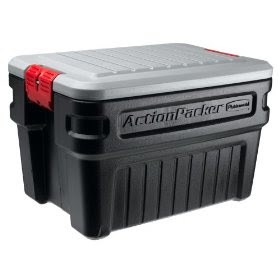
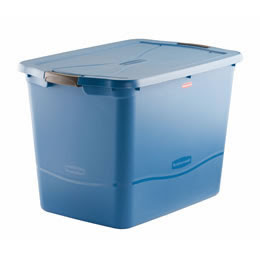
Depending on the amount of merch and the size of the bins you should be able to store most of your merchandise into these bins. Now, these are better used on small to mid-level bands as high level bands quite often go through merch so fast and have so much to sell it wouldn’t be prudent to use a bin like this for t-shirts, though it may be for smaller merchandise like bandanas, belt buckles, etc. that are heavier or are more expensive. Also note that if you use heavy duty storage bins they can double as step-stools and chairs when a venue lacks that sort of stuff!
Smaller "Merch Kit" Container

A smaller container to hold all of the stuff that will make up your "merch kit" is essential. Something that clasps shut and has a handle is ideal but any plastic container will do. This will carry all of your day-to-day merch essentials which we will discuss below, so organization is key. Things that often work well are professional make-up boxes as they have lots of compartments and are easy to organize.
Merch Kit
Grid Panel
A grid panel is a metal grid that you can attach to or hang up on the wall to clip up t-shirts and other sellable product so that fans can see the product clearly. Often mid-size and smaller venues don't have anything to attach product to, so to look professional you can bring your own panel for display purposes.
Butterfly Clips
These little clips help attach t-shirts to your display or hang up posters/pictures/cd's etc. They come in a wide range of sizes and come in very handy for a lot of things.
Flash Cards
Flash cards are a great way to display what sizes you have available if you have a lot of stock in various sizing ranges. Write the style name and the size range on the flash card and as you sell out of styles you can cross them out. This will help for when people ask what sizes you have. You will often still get the same questions but at least you have a reference to point to when the venue is loud! I usually attach these right to the t-shirts or wall underneath the t-shirts with straight pins or thumb tacks, tape also works.
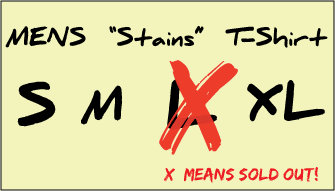
Printed Merch Pricing
A sheet with each individual item for sale and it's cost comes in pretty handy when you have a long lineup for merch! These are good to put up all over your merch area so lots of people can see them!

Clear Plastic Picture Frame Stands
To display your merch price lists on the merch table these picture frame stands can be helpful. Usually they are plastic and come in an 8.5" x 11" size for regular sheets of paper.
Binder - Sell Sheets / Inventory List
Your binder is a very important part of your merch! It keeps records of sales at each show so you can track how well your sales are doing. You can also keep settlement sheets from venues when you have to give some of your profits to the house and it also comes in handy for keeping track of inventory for when you need to order more. This way you know which sizes and items you sell out of first, thus making it easier to know which sizes to order more of next time!
Plastic CD Stands
You know when grandma's have decorated plates displayed allover their little houses and some are standing up on a shelf or a mantle? Usually they are propped up with a plate display stand of some kind. These can usually be purchased at dollar stores and come in really handy for displaying CD's and books!

Other "Supplies":
Stapler / Staples
Sharpies (ALWAYS a necessity!)
Mechanical Pencils
Pens
Pencil Case
Thumb Tacks
Duct Tape / Electrical Tape / Masking Tape / Scotch Tape (Any kind of tape is helpful!)
Hangers (For displaying tees when you don't have a grid panel!)
Lighter
Scissors
1-Hole Punch
Ruler
Measuring Tape
Note Pad (for making notes when working or writing down information you may need later!)
Plastic Carry Bags (people won't ask for bags often but when they do it'll be handy to have them!)
Small Hammer / Nails
All of these items will come in handy when setting up your merch area. Keep in mind that the neater your area is and the more you do to customize it, the more professional it will look and professionalism is important!
Monday, October 20, 2008
Merch 101: Know Your Printer!
Lesson 4: No Bullshit!
One of the things I’ve found the most common when working with screen printers is the fact that in the end all they care about is how much money is in their pockets. I guess it’s important that people get paid, but one of the most aggravating things to me is when people couldn’t give two craps about their customers.
Screen Printers will lie, steal and cheat if it means they don’t lose money on an order. It’s important to be very focused on your order and your expectations when you go to a screen printer. Don’t worry about being nice because the screen printer sure won’t!
Here are just a few scenarios that happen incredibly frequently in the screen printing industry. What they will do and what you can do to prevent it or deal with it:
1 – Your order is a few days past the delivery date and the screen printer doesn’t know when you should expect it to be ready. Make it very clear that you gave more than ample time for your order to be processed. (Please note that it’s important that you actually did give ample time – 2 weeks is usually ideal.) If your screen printer wasn’t capable of printing your order within that time or was missing information and didn’t contact you for it, then they are responsible for the delay. I would recommend that you ask for some sort of compensation for this, free screen charge, no freight on shipments, something to prove that when you give a deadline date that is when you expect it to be finished. Most printers have a lot of extra padded pricing, so they can afford to knock off a screen charge or two without losing money on the order. But remember, Rush orders are bad news! Don’t give your printer an excuse to be late, plan ahead and make sure that you have provided everything a printer could need within at LEAST two weeks’ notice.
2 – You sent all of the finalized artwork to the printer, but something went wrong and it was printed wrong and they won’t admit it’s their fault. This is when it comes in handy to sort as much of the details as you can out by email – then you have a record of it! Make absolute SURE that you sent all of the artwork correctly, sized to printing size and with proper instructions. If you did all that and your order still managed to get screwed up then it is your printers fault. Printers often try to justify things by saying stuff like “Well I wouldn’t have noticed, even comparing it to the mock up, it looks close!” They are just trying to get you to agree with them. Don’t let their sly ways confuse you, Grasshopper! Stand your ground and make the printer pay for the damages and/or the new printing and blanks. Why should you have to pay out of your pocket for their mistake? Eh? Eh?
3 – You got your order back and several of the items are damaged and you were still charged for them. Many screen printers neglect that little thing called “quality” in lieu for “speed”. If you get an order and several (more than 2% of the items) of the pieces are printed incorrectly or are damaged bring them back to the printer. Show them each item and make a list of the total quantity, size, print, price and damage of each style. Add it up and ask them to order and fix any merchandise that was printed incorrectly. Anything less than 10 pieces ask for a refund for the items and call it even. The printer may try and offer you a credit, but FYI most printers keep horrible and out-of-date records and won’t remember the credit and will beat around the bush next time you order.
4 – You got charged a lot more than what you were quoted. In my experience, most cases like this are because the customer is incapable of basic math, however, in some cases I have seen printers throw in extra charges here and there because they under-quoted the job. But, just like at a store, the price you were given is the price you shall pay. NEVER, and I repeat, NEVER (!!!) go ahead with a print job without getting a complete quote on it. If you haven’t added anything to the order along the way, then the printer shouldn’t be either. Before the order is processed ask for an invoice or order sheet with the total charges pending everything in the order is printed properly. Save that invoice and make note of charges like Screen Charges, Art Charges, Film charges, etc. Talk to your printer about what each of these are and whether or not you will have to pay them upon reorder. If you feel like you were overcharged go over each item with your printer until you are satisfied.
Printers screw up all of the time, it’s a fast-paced environment and sometimes things get mixed up. Always allow for a 2% margin of error (make sure you aren’t paying for that 2% in your invoice, however!) and inspect all of your garments carefully. Try to keep your orders as uncomplicated and informative as possible.
- Attach a Digital Mockup of the artwork on the t-shirts
- Include all sizing & measurements exactly to scale (you don’t have to make things huge for them to look good, either!)
- Make sure that if you are sending a file with a type font used that you have either rasterized or created outlines in the art, otherwise the printer may not be able to read it in the proper font. (Another option for this is to attach the font file with the artwork)
- Information about the Style of Garment, Blank Colors, Quantities, Etc. (this is best provided in a purchase order for your own documentation!) – eg. American Apparel Style #2102 Ladies Fine Jersey S/S Tee in BLACK, 25/SM 20/MD 15/LG 30/XL TOTAL = 90 PCS
- Send your art sized to spec at a minimum of 300 DPI (pixels per inch!) (this means if it is supposed to be printed at 10” W, then make the artwork 10” W! )
- Don’t just say “RED” or “BLUE” for an ink color, there are thousands of variations of these shades. Pick specific pantone colors. If you don’t have pantone color info available to you, select these at your screen printer (this is ideal!)
- Provide any and all contact info you have available: Name, Band/Company Name, Phone, Fax, Email, Website, etc.
- Provide specific details about shipping instructions and Deadline date… *NOTE* If you need an order absolutely MUST have it by say, Thursday, make your deadline date TUESDAY. Always plan ahead.
- Make sure you know your payment arrangement. If you are expected to pay a deposit, how much, when will you have to pay the balance and how?
If you can be prepared to give all of this information to your printer when you walk in to make an order, I guarantee there will be a much smaller chance of something going wrong with your order. 99% of the time the mistakes are made when there isn’t enough information provided.
Most importantly, get familiar with your printer and their facilities. Learn about the things they can and can’t do and their other customers. Pay attention to the quality of their shop and their showroom and how much care and effort they put into their company, because essentially that is going to be the same care and effort that they put into your product.
When it comes to merch you’ve got to spend money to make money, so make sure you are spending it somewhere good!
Subscribe to:
Posts (Atom)


